
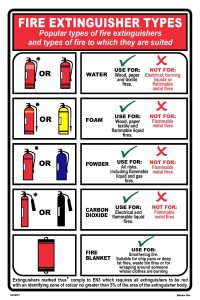
Fire extinguishers, known as extinguishers, vary based on the type of agent they use to extinguish fires. Here's a more detailed explanation of several basic types of extinguishers:
- Powder Fire Extinguishers: These devices use fine powder, which is dispersed under pressure to extinguish the fire. The powder can be sodium bicarbonate, potassium bicarbonate, or ABC powder, a mixture of different components. Powder extinguishers are effective for extinguishing fires caused by electrical installations, flammable liquids, and solid fuels.
- Foam Fire Extinguishers: Foam Fire Extinguishers use water-based foam, which is dispersed under pressure. The foam creates a blanket that prevents oxygen from reaching the fire, thereby reducing its ability to spread. These extinguishers are effective for extinguishing fires involving fuels such as oil, gasoline, and alcohol.
- Gas Fire Extinguishers: use pressurized gas, such as carbon dioxide (CO2) or halon, to remove oxygen from the fire zone, thereby smothering the fire. Gas extinguishers are suitable for extinguishing fires on electrical equipment and sensitive materials that could be damaged by water or powder.
- Water Fire Extinguishers: use water as the extinguishing agent. These devices may be filled with pressurized water or contain water with added additives to enhance its effectiveness. Water extinguishers are most commonly used for extinguishing fires on solid materials such as wood, fabric, and paper.
Choosing the appropriate fire extinguisher is important for effective fire suppression and minimizing damage. When using a fire extinguisher, it is essential to carefully follow the manufacturer's instructions to ensure safety and efficiency in extinguishing the fire.
 English
  Crnogorski